← Back to Places
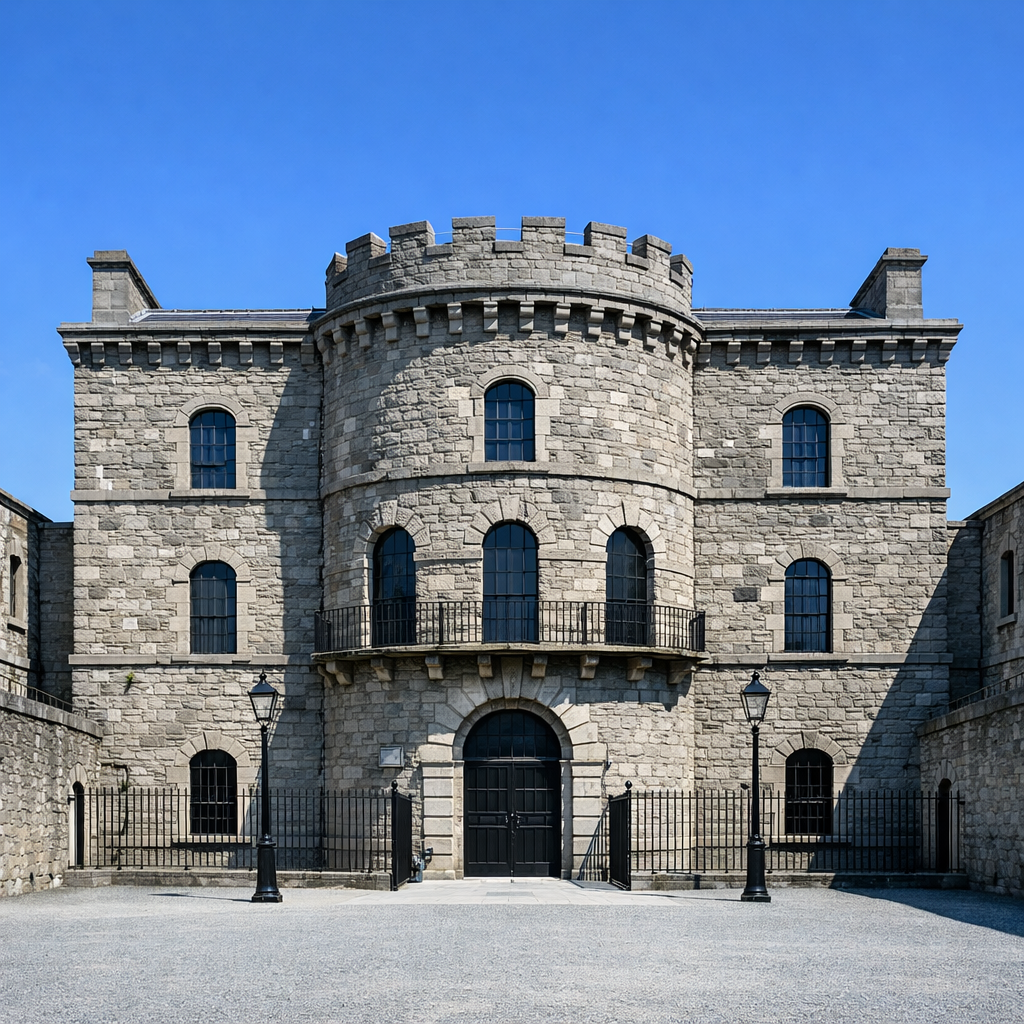
Kilmainham Gaol (Irish: Príosún Chill Mhaighneann) is a former prison in Kilmainham, Dublin, Ireland. It is now a museum run by the Office of Public Works, and is one of the largest unoccupied gaols in Europe, covering some of the most heroic and tragic events in Ireland's emergence as a modern nation from the 1780s to the 1920s.
The gaol was built between 1792 and 1796 and originally called the "New Gaol" to distinguish it from the old prison it was intended to replace. It held prisoners from all walks of life, from the poor and destitute to political prisoners and revolutionaries who shaped modern Ireland.
Many leaders of Irish rebellions were imprisoned and executed here, including the leaders of the 1916 Easter Rising. Robert Emmet was held here after leading his rebellion in 1803, and Charles Stewart Parnell was imprisoned here in 1881-1882. The executions of the 1916 leaders turned public opinion in Ireland decisively away from the British administration and towards the cause of Irish independence.
The fourteen men executed in the stonebreakers' yard included Patrick Pearse, James Connolly, and Joseph Plunkett. Connolly, who was severely wounded in the Rising, was executed while tied to a chair because he could not stand.
The gaol was designed to hold a capacity of 200 prisoners in individual cells. Its design was influenced by the ideas of prison reformer John Howard, who advocated for the separation of prisoners to prevent corruption and disease. The building features the typical Victorian panopticon design, with corridors radiating from a central point to allow observation of all cells.
The East Wing, added in the 1860s, features the famous Victorian wing with its ornate ironwork and glass ceiling that has made Kilmainham Gaol a popular filming location for movies including "In the Name of the Father" and "The Italian Job."
After the gaol closed in 1924, it fell into disrepair until 1960 when a volunteer restoration committee began the painstaking work of restoring it. Today, Kilmainham Gaol is one of Ireland's most visited tourist attractions, offering guided tours that bring the building's history to life.
The museum collections include a wide range of artifacts, letters, and photographs from the various periods of the gaol's operation. Visitors can walk through the same corridors and cells that held some of Ireland's most celebrated patriots.